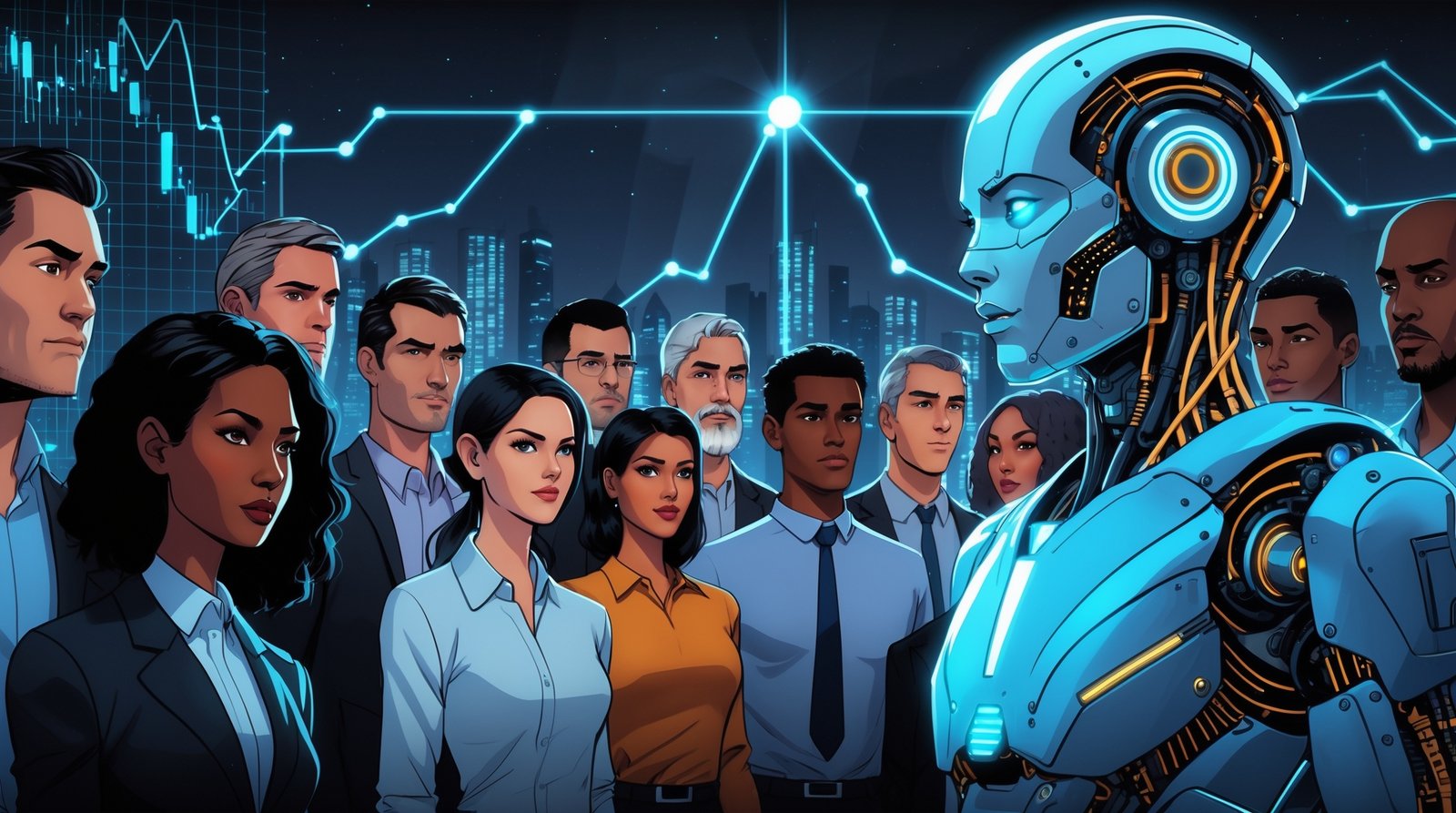
The financial markets are undergoing a seismic transformation. What was once the exclusive domain of Wall Street quants and institutional traders is now accessible to everyday investors through artificial intelligence. As we stand at the intersection of finance and technology, AI-driven trading platforms are not just emerging—they’re redefining the entire landscape of how wealth is created, managed, and distributed. The question isn’t whether AI will dominate trading, but rather which platforms will lead this revolution.
AI trading platforms use machine learning algorithms to analyze market data and execute trades autonomously, removing emotional bias and operating 24/7. These systems adapt to market conditions in real-time, offering retail investors institutional-grade capabilities previously unavailable outside major financial institutions.
The Evolution of Trading: From Pit to Algorithm
Trading has evolved dramatically over the past century. The transition from open outcry trading floors to electronic exchanges was just the beginning. Today’s algorithmic trading represents a quantum leap forward, where decisions are made in microseconds based on data patterns invisible to the human eye.
Traditional trading methods suffer from inherent limitations: human emotion, fatigue, limited processing capacity, and the inability to monitor multiple markets simultaneously. These constraints have historically given institutional investors with vast resources an insurmountable advantage. AI democratizes this playing field by providing sophisticated analysis and execution capabilities to individual traders.
The numbers tell a compelling story. Algorithmic trading now accounts for approximately 60-75% of overall U.S. equity trading volume, and this percentage continues to climb. What’s particularly noteworthy is the shift from simple rule-based algorithms to adaptive machine learning systems that improve their performance over time.
Key Fintech AI Trends Shaping Tomorrow’s Markets
Several transformative trends are converging to accelerate the future of AI trading, creating an ecosystem where technology and finance become increasingly inseparable:
- Deep Learning Integration: Neural networks now process vast datasets including price movements, volume patterns, sentiment analysis, and macroeconomic indicators simultaneously, identifying correlations that traditional analysis would miss.
- Natural Language Processing: AI systems scan news feeds, social media, earnings calls, and regulatory filings in real-time, translating qualitative information into quantitative trading signals.
- Quantum Computing Readiness: While still emerging, quantum computing promises to exponentially increase the complexity of models AI trading platforms can deploy.
- Democratization of Access: Cloud computing and API technologies have reduced the barrier to entry, allowing platforms like BluStar AI to offer institutional-grade capabilities to retail traders.
- Regulatory Evolution: Financial authorities worldwide are developing frameworks specifically for AI-driven trading, providing clarity that encourages innovation while protecting market integrity.
These trends aren’t isolated developments—they’re interconnected forces multiplying each other’s impact. The platform that successfully integrates these elements while maintaining user trust and regulatory compliance will likely emerge as a market leader.
What Sets Leading AI Trading Platforms Apart
Not all AI trading platforms are created equal. As the market matures, clear differentiators separate genuine innovation from marketing hype. Understanding these distinctions is crucial for investors evaluating where to place their trust and capital.
| Feature | Traditional Platforms | Advanced AI Platforms |
|---|---|---|
| Decision Making | Manual or rule-based | Adaptive machine learning |
| Market Coverage | Limited by user attention | Continuous 24/7 monitoring |
| Risk Management | Static parameters | Dynamic adjustment |
| Learning Capability | None | Improves with data |
| Emotional Bias | Significant impact | Eliminated |
The most sophisticated platforms share several critical characteristics. They maintain transparency in their operations, allowing users to understand how decisions are made without compromising proprietary algorithms. They implement robust risk management protocols that adapt to changing volatility conditions. Perhaps most importantly, they preserve user autonomy—traders maintain control over their funds and can intervene or adjust parameters as needed.
Specialization also matters. Platforms that focus on specific asset classes—whether gold, cryptocurrencies, or forex—can develop deeper expertise in those markets’ unique characteristics. This focused approach often outperforms generalist solutions that attempt to cover all markets superficially.
BluStar Stock and the Investment Case for AI Trading Companies
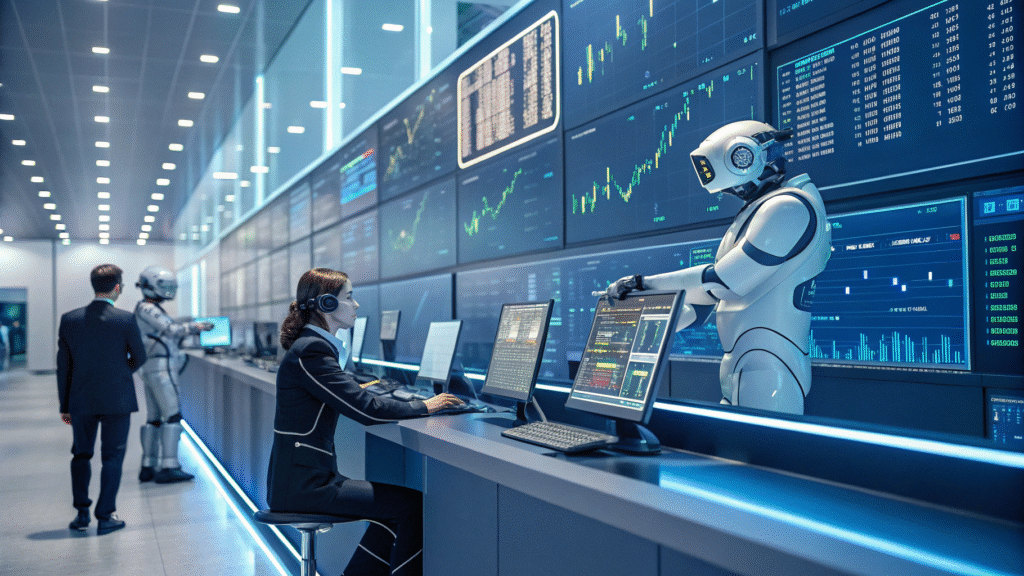
While “BluStar stock” generates considerable search interest, it’s important to understand the broader investment thesis surrounding AI trading platforms. The market for automated trading solutions is projected to grow substantially, driven by increasing retail participation in financial markets and growing comfort with AI-driven decision-making.
Investment considerations for companies in this space include:
- Technology Moat: Does the platform possess proprietary algorithms or data advantages that competitors cannot easily replicate?
- Regulatory Positioning: How well-prepared is the company to navigate evolving financial regulations across multiple jurisdictions?
- User Growth Metrics: Is the platform demonstrating sustainable user acquisition and retention?
- Performance Track Record: Can the platform demonstrate consistent risk-adjusted returns across different market conditions?
- Partnership Ecosystem: Does the company work with established, regulated brokers to ensure fund security?
Companies like BluStar AI that combine technical sophistication with user-centric design represent an interesting investment proposition. Their approach of maintaining user control over funds while providing institutional-grade AI analysis addresses two primary concerns that have historically limited adoption: trust and accessibility.
The fintech sector’s valuation dynamics favor platforms that can demonstrate network effects and scalability. As AI trading platforms acquire more users and process more trades, their algorithms theoretically improve through exposure to more diverse market conditions, creating a self-reinforcing competitive advantage.
Challenges and the Path Forward
Despite the enormous potential, the future of AI trading faces legitimate challenges that must be addressed for widespread adoption. Market participants, regulators, and platform developers must navigate these obstacles collaboratively.
Regulatory Uncertainty: Financial regulations were designed for human decision-makers. Adapting these frameworks to algorithmic trading—particularly systems that learn and evolve autonomously—requires careful consideration. Questions around liability, transparency requirements, and systemic risk remain partially unresolved.
Black Swan Events: AI systems train on historical data, which means unprecedented market events can challenge their decision-making frameworks. The most robust platforms build in circuit breakers and human oversight for extreme scenarios.
Cybersecurity: As trading platforms become more valuable targets, security infrastructure must evolve accordingly. The intersection of AI, cloud computing, and financial transactions creates unique vulnerabilities that require constant vigilance.
Education Gap: Many potential users lack understanding of how AI trading works, creating hesitancy. Successful platforms must invest heavily in education and transparency to build trust.
Despite these challenges, the trajectory is clear. AI trading represents not a speculative future but an accelerating present. Platforms that successfully balance innovation with responsibility, power with transparency, and automation with user control are positioned to lead this transformation.
The Competitive Landscape Ahead
The next decade will likely see consolidation in the AI trading space. Early movers with strong technology foundations and user trust will capture disproportionate market share. We can expect:
- Increased integration between AI trading platforms and traditional financial institutions
- Expansion into new asset classes as algorithms prove their effectiveness
- Greater customization allowing users to align AI behavior with their risk tolerance and investment philosophy
- Enhanced explainability features that help users understand AI decision-making processes
- Cross-platform data sharing (with appropriate privacy protections) that improves overall system intelligence
The companies that thrive will be those that view AI not as a replacement for human judgment but as an augmentation—a tool that handles data processing and execution while humans provide strategic direction and ethical oversight.
The future of AI trading is not a distant vision—it’s unfolding now. As platforms continue to evolve, becoming more sophisticated yet more accessible, they promise to fundamentally reshape who participates in financial markets and how wealth is created. For fintech enthusiasts, investors, and analysts watching this space, the question isn’t whether to pay attention, but how to position yourself for the transformation ahead. The platforms leading this revolution will be those that combine cutting-edge technology with unwavering commitment to user empowerment, transparency, and responsible innovation.
Disclaimer:
All information and features provided by this trading system are intended for entertainment purposes only and do not constitute financial or investment advice. Trading and investing in financial markets involve significant risk and can result in the loss of your funds. There is no guarantee of accuracy, performance, or profitability. Automated trading systems may experience errors, delays, or unexpected behavior. By using this system, you acknowledge that you are fully responsible for all trading decisions and potential losses. Always do your own research and trade at your own risk.