Financial markets never sleep, and neither do AI trading bots. These sophisticated algorithms are reshaping how traders approach gold, Bitcoin, and forex markets by executing trades with precision, speed, and emotion-free discipline. For tech-curious investors and active traders, understanding how these systems work isn’t just interesting—it’s increasingly essential.
AI trading bots use machine learning algorithms to analyze market data, identify patterns, and execute trades automatically based on predefined strategies. They process thousands of data points per second, removing human emotion while operating 24/7 across global markets.
The Core Technology Behind AI Trading Bots
At their foundation, AI trading bots combine several advanced technologies to function effectively. Unlike simple automated scripts that follow basic if-then rules, modern AI trading systems employ deep learning neural networks that can recognize complex patterns and adapt to changing market conditions.
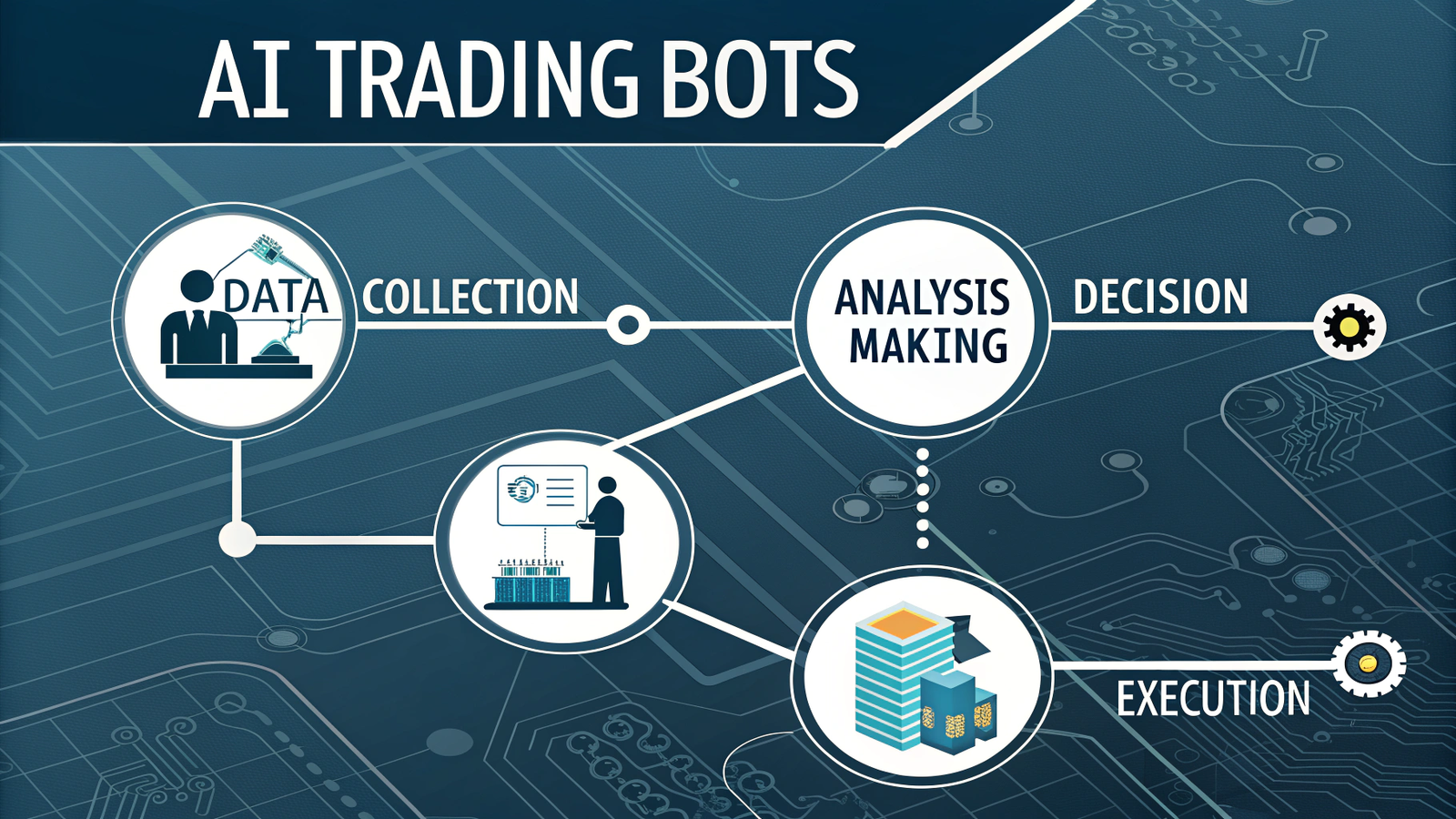
The technical architecture typically includes:
- Data ingestion engines that collect real-time price feeds, volume data, news sentiment, and technical indicators
- Machine learning models trained on historical market data to identify profitable patterns
- Risk management algorithms that calculate position sizes and set stop-loss parameters
- Execution systems that interface with broker APIs to place trades instantly
- Feedback loops that allow the system to learn from outcomes and refine strategies
What distinguishes AI-powered systems from traditional automated trading is their ability to improve over time. Through reinforcement learning, these bots can test thousands of strategy variations, discarding what doesn’t work and optimizing what does—all without human intervention.
How Automated Trading Systems Make Decisions
The decision-making process of an AI trading bot happens in milliseconds, but understanding the logic reveals why they’re so effective. When markets move, the bot immediately analyzes multiple data streams simultaneously—something impossible for human traders to replicate.
A typical decision cycle includes:
- Market scanning: The bot monitors price movements, volume changes, and volatility across selected assets
- Pattern recognition: Neural networks identify formations that historically preceded profitable moves
- Probability assessment: The system calculates win probability and potential risk-reward ratios
- Risk evaluation: Current portfolio exposure and account balance determine position sizing
- Execution decision: If all criteria align, the bot places the trade through the broker’s API
- Monitoring: Active positions are continuously tracked with dynamic stop-loss and take-profit adjustments
Platforms like BluStar AI have refined this process for specific markets, with specialized bots designed for gold, Bitcoin, and forex trading. Each bot is optimized for the unique characteristics of its target market—volatility patterns, trading hours, and liquidity conditions.
Why AI Bots Outperform Emotional Human Trading
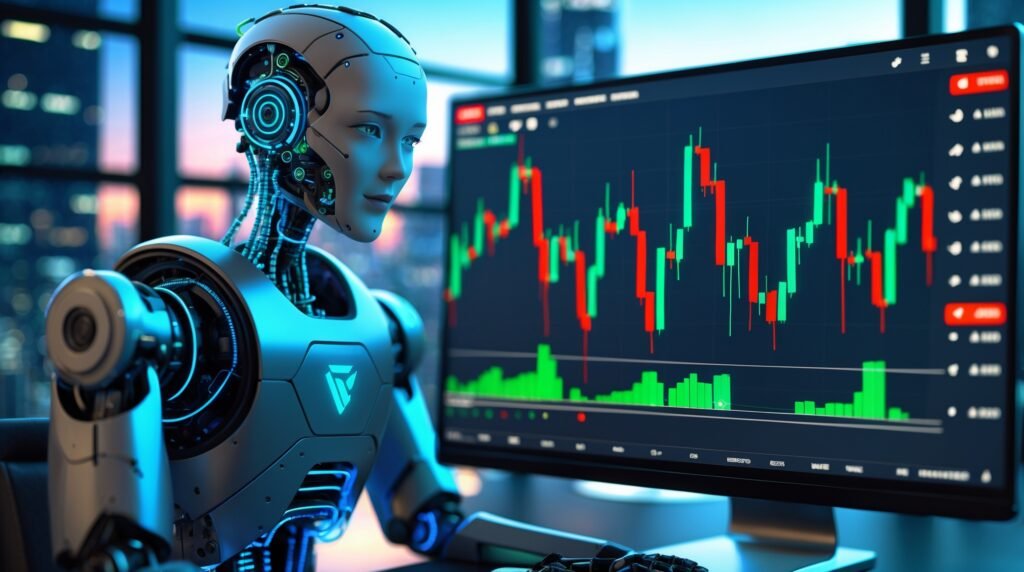
The psychological dimension of trading is where AI systems demonstrate their most significant advantage. Human traders struggle with cognitive biases that consistently undermine performance: fear during downturns, greed during rallies, and the tendency to hold losing positions too long while selling winners too early.
AI trading bots eliminate these problems entirely:
| Human Trading Challenge | AI Bot Advantage |
|---|---|
| Emotional decision-making | Pure logic based on data and probabilities |
| Fatigue and limited attention | 24/7 operation without performance degradation |
| Inconsistent strategy execution | Perfect adherence to predefined rules |
| Slow reaction to market changes | Millisecond response times |
| Limited data processing capacity | Simultaneous analysis of thousands of variables |
| Revenge trading after losses | No emotional response to individual outcomes |
This emotional neutrality becomes particularly valuable during market turbulence. When news breaks or volatility spikes, human traders often freeze or make impulsive decisions. AI systems simply recalculate probabilities and adjust positions according to their risk parameters—no panic, no hesitation.
Real-World Applications Across Different Markets
AI trading bots have proven effective across various financial markets, each presenting unique opportunities and challenges. The technology adapts to different asset classes while maintaining core advantages.
Cryptocurrency Markets: Bitcoin and altcoin trading benefits enormously from automation. These markets operate continuously without closing bells, making 24/7 monitoring essential. AI bots capture opportunities during Asian, European, and American trading sessions without requiring the trader to stay awake. The high volatility in crypto markets also creates frequent trading opportunities that algorithms can exploit faster than manual traders.
Forex Trading: The foreign exchange market’s massive liquidity and tight spreads make it ideal for algorithmic strategies. AI bots can simultaneously monitor multiple currency pairs, identifying correlations and divergences that signal trading opportunities. They execute trades during optimal liquidity windows and avoid periods when spreads widen unfavorably.
Commodities and Gold: Precious metals trading involves complex factors including geopolitical events, inflation data, and currency movements. AI systems can process these multi-dimensional inputs and identify how they historically influenced gold prices, then apply those insights to current market conditions.
Getting Started With AI-Powered Trading
For traders interested in leveraging this technology, the barrier to entry has decreased significantly. Modern platforms have made sophisticated AI trading accessible without requiring programming knowledge or deep technical expertise.
Key considerations when adopting automated trading include:
- Fund control: Choose platforms where you maintain custody of your capital through established brokers rather than transferring funds to unknown entities
- Transparency: Look for systems that provide clear performance metrics and real-time tracking of bot decisions
- Flexibility: Ensure you can start, pause, or stop trading at any time without restrictions
- Specialization: Select bots designed specifically for your target markets rather than generic solutions
- Risk management: Verify that the system includes robust position sizing and drawdown protection
The BluStar trading bot platform exemplifies this modern approach—combining institutional-grade AI technology with user-friendly interfaces that allow traders to benefit from automation while maintaining full control over their accounts through trusted brokerage partners.
The Future of Algorithmic Trading
As machine learning models become more sophisticated and computing power increases, AI trading bots will continue evolving. Next-generation systems are incorporating natural language processing to analyze news sentiment in real-time, alternative data sources like satellite imagery for commodity trading, and even more advanced neural network architectures.
For individual traders, this technological progression represents democratization. Strategies once available only to hedge funds with millions in research budgets are now accessible to anyone with a brokerage account and an internet connection. The playing field hasn’t become completely level—institutional players still have advantages—but the gap has narrowed considerably.
The transformation of financial markets through AI isn’t a distant future scenario; it’s happening now. Trading volumes executed by algorithms already dominate major exchanges, and that percentage continues growing. For traders who embrace these tools intelligently, AI trading bots represent not a replacement for human judgment but an enhancement—a way to execute strategies with discipline, speed, and consistency that manual trading simply cannot match.
Whether you’re trading cryptocurrencies during volatile market swings, capturing forex opportunities across time zones, or positioning in gold during geopolitical uncertainty, AI-powered automation offers a compelling advantage. The question isn’t whether algorithmic trading will shape the future of markets—it’s whether you’ll leverage that transformation or watch from the sidelines.
Disclaimer:
All information and features provided by this trading system are intended for entertainment purposes only and do not constitute financial or investment advice. Trading and investing in financial markets involve significant risk and can result in the loss of your funds. There is no guarantee of accuracy, performance, or profitability. Automated trading systems may experience errors, delays, or unexpected behavior. By using this system, you acknowledge that you are fully responsible for all trading decisions and potential losses. Always do your own research and trade at your own risk.