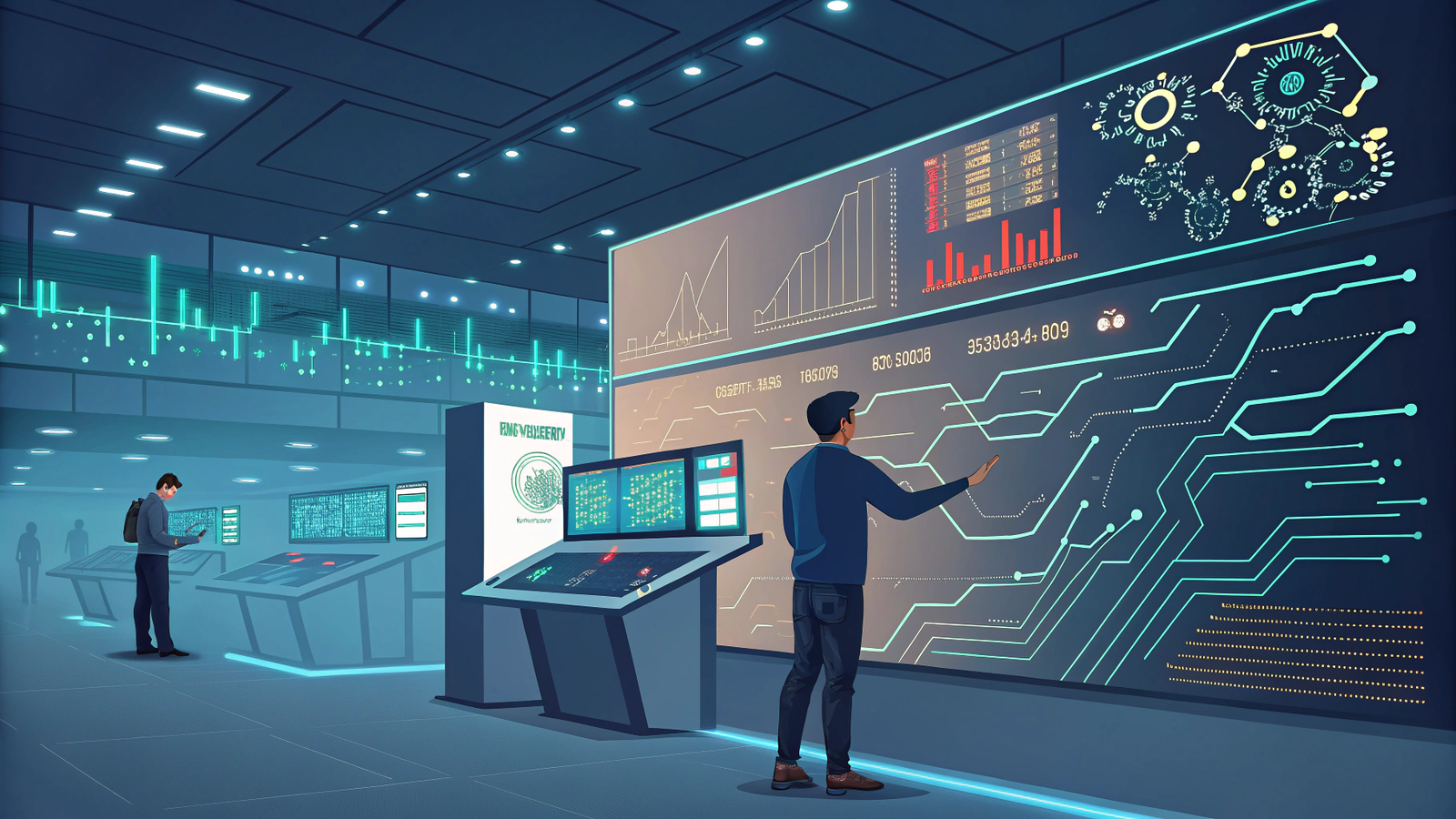
The financial markets never sleep, and neither does artificial intelligence. As technology continues to reshape every industry, AI trading automation has emerged as one of the most transformative forces in modern investing. What was once the exclusive domain of Wall Street hedge funds and institutional investors is now accessible to everyday traders, fundamentally changing how people approach the markets.
AI trading automation uses machine learning algorithms to analyze market data, identify patterns, and execute trades automatically without human intervention. These systems process vast amounts of information in milliseconds, removing emotional bias while operating 24/7 across global markets like forex, cryptocurrencies, and commodities.
Whether you’re a seasoned investor looking to optimize your strategy or a beginner curious about algorithmic trading, understanding how AI is revolutionizing the investment landscape is essential. This technology isn’t just about faster trades—it’s about smarter decision-making, better risk management, and the democratization of sophisticated trading tools that were previously out of reach.
What Is AI Trading Automation?
AI trading automation refers to the use of artificial intelligence and machine learning algorithms to make trading decisions and execute orders in financial markets. Unlike traditional trading methods that rely on human judgment and manual execution, automated systems analyze market conditions, identify opportunities, and place trades based on predefined parameters and learned patterns.
At its core, algorithmic trading combines three key elements:
- Data analysis: Processing real-time and historical market data including price movements, volume, news sentiment, and technical indicators
- Pattern recognition: Identifying profitable trading opportunities through machine learning models trained on vast datasets
- Automated execution: Placing buy and sell orders instantly when specific conditions are met, without requiring human approval
Modern AI trading systems go far beyond simple rule-based algorithms. They continuously learn from market behavior, adapt to changing conditions, and refine their strategies over time. This dynamic approach allows them to navigate complex market environments that would overwhelm human traders trying to monitor multiple assets simultaneously.

How AI Trading Automation Actually Works
Understanding the mechanics behind AI trading automation helps demystify what might seem like a black box. The process involves several sophisticated steps that happen in fractions of a second:
First, the system continuously collects data from multiple sources—price feeds, economic indicators, news articles, social media sentiment, and historical patterns. This information streams into the AI engine in real-time, creating a comprehensive view of market conditions.
Next, machine learning algorithms process this data using techniques like neural networks, natural language processing, and statistical analysis. The system identifies correlations, trends, and anomalies that signal potential trading opportunities. Unlike humans who can only focus on a limited number of factors, AI can simultaneously analyze hundreds of variables across multiple timeframes.
When the algorithm detects a favorable setup based on its trained parameters, it calculates the optimal position size, entry price, stop-loss level, and profit target. The system then automatically executes the trade through a connected brokerage platform, all within milliseconds of identifying the opportunity.
Throughout the trade’s lifecycle, the AI continuously monitors market conditions and can adjust or exit positions dynamically. If market volatility spikes or the original thesis becomes invalid, the system responds immediately—far faster than any human could react.
Platforms like BluStar AI have made this sophisticated technology accessible to individual traders by offering pre-configured bots for specific markets like gold, Bitcoin, and forex. These solutions handle the complex technical infrastructure while allowing users to maintain full control over their funds through trusted brokerage partners.
Key Benefits of AI Trading Automation
The shift toward automated trading isn’t just a technological trend—it addresses fundamental challenges that have plagued human traders for generations. Here’s why more investors are embracing AI-powered solutions:
| Benefit | Description |
|---|---|
| 24/7 Market Coverage | AI systems monitor and trade continuously across global markets without breaks, capturing opportunities in any timezone |
| Emotion-Free Trading | Eliminates fear, greed, and impulsive decisions that often lead to losses in manual trading |
| Speed and Efficiency | Executes trades in milliseconds, capitalizing on fleeting opportunities before they disappear |
| Data Processing Power | Analyzes thousands of data points simultaneously, far exceeding human cognitive capacity |
| Consistent Strategy Execution | Follows trading rules precisely without deviation, maintaining discipline through all market conditions |
| Backtesting Capabilities | Tests strategies against historical data to validate effectiveness before risking real capital |
Perhaps most importantly, AI trading automation democratizes access to institutional-grade strategies. Individual investors can now benefit from the same quantitative approaches that hedge funds have used for decades, leveling the playing field in markets that have traditionally favored large players with significant resources.
Risk Management and Intelligent Position Sizing
One often-overlooked advantage of AI systems is their superior risk management. Human traders frequently make position-sizing errors or fail to cut losses quickly enough due to hope or attachment. Automated systems calculate risk mathematically, ensuring that no single trade can devastate an account and that overall exposure remains within acceptable parameters.
Different Types of AI Trading Strategies
AI trading automation encompasses various approaches, each suited to different market conditions and investor goals. Understanding these strategies helps you choose the right solution for your needs:
Trend Following: These algorithms identify and ride sustained price movements in either direction. By analyzing momentum indicators and moving averages, trend-following bots enter positions when clear directional moves are detected and exit when the trend shows signs of exhaustion.
Mean Reversion: Based on the principle that prices eventually return to their average, these systems identify overbought or oversold conditions and trade against short-term extremes. This approach works particularly well in range-bound markets.
Arbitrage: These sophisticated systems exploit price discrepancies between related assets or across different exchanges. By simultaneously buying and selling, they capture risk-free profits from temporary inefficiencies.
High-Frequency Trading (HFT): Operating on extremely short timeframes, HFT algorithms make thousands of trades per day, profiting from tiny price movements. This requires advanced infrastructure and is primarily used by institutional traders.
Sentiment Analysis: These AI systems scan news articles, social media, and other text sources to gauge market sentiment, then trade based on the collective mood surrounding specific assets.
Modern platforms like BluStar AI often combine multiple strategies within their specialized bots, adapting their approach based on current market conditions. This hybrid methodology provides more consistent performance across different market environments.
Getting Started with AI Trading Automation
For investors ready to explore AI trading automation, the path forward is more accessible than ever. Here’s a practical roadmap to begin your journey:
- Educate yourself: Understand basic trading concepts, market dynamics, and how algorithmic systems operate. You don’t need to be a programmer, but foundational knowledge helps you make informed decisions.
- Define your objectives: Clarify your investment goals, risk tolerance, and preferred markets. Are you interested in cryptocurrencies, forex, commodities, or multiple asset classes?
- Research platforms: Evaluate different AI trading solutions based on transparency, track record, user reviews, and the quality of their technology. Look for platforms that provide clear performance metrics and allow you to maintain control over your funds.
- Start small: Begin with a modest investment to understand how the system operates in real market conditions. Monitor performance closely and gradually scale as you build confidence.
- Monitor and adjust: While automation handles execution, successful investors remain engaged. Review performance regularly, understand why certain trades were made, and adjust parameters if needed.
What to Look for in an AI Trading Platform
Not all automated trading solutions are created equal. When evaluating options, prioritize these critical factors:
- Transparency: The platform should clearly explain its methodology and provide detailed performance reporting
- Risk management: Look for built-in safeguards including stop-losses, position limits, and drawdown protection
- User control: You should be able to start, pause, or stop trading at any time and maintain custody of funds through reputable brokers
- Specialization: Bots designed for specific markets often outperform generic solutions
- Support and education: Quality platforms provide resources to help users understand and optimize their trading
The Future of AI in Investing
AI trading automation represents more than a technological advancement—it’s a fundamental shift in how markets operate and who can participate effectively. As machine learning models become more sophisticated and computing power continues to increase, these systems will only grow more capable.
The democratization of algorithmic trading tools means that individual investors no longer need to compete with one hand tied behind their backs. By leveraging AI automation, everyday traders can access the same analytical power and execution speed that institutional investors have long enjoyed.
However, it’s important to maintain realistic expectations. AI trading automation is a powerful tool, not a guaranteed path to riches. Like any investment approach, it carries risks and requires due diligence. The most successful users combine automated systems with sound financial planning, appropriate position sizing, and ongoing education.
As you explore this exciting frontier, remember that the goal isn’t to remove yourself entirely from the investment process. Rather, AI trading automation serves as an intelligent partner—handling the heavy lifting of data analysis and emotionless execution while you focus on strategic decisions and portfolio management. This collaboration between human judgment and machine efficiency represents the future of investing, and that future is already here.